Laundry Renovations
Auckland’s trusted bathroom renovation specialists — licensed, experienced, and built to last
What’s Covered on This Page
- Signs Your Laundry Room Needs a Full Renovation
- Choosing the Right Layout for a Small or Awkward Laundry Space
- What to Expect from a Laundry Renovation in Auckland
- Waterproofing and Tiling Standards for Laundry Rooms
- How long does a laundry renovation take in Auckland?
- Do Auckland homes need a waterproof membrane in the laundry?
- Can a really small laundry space actually be renovated properly?
- What are the signs that my laundry needs a full renovation rather than just a repair?
- Do I need to move out during a laundry renovation?
- How do I stop mould from coming back after my laundry is renovated?
Need laundry renovations?
Call Now For Free Consultation. Call Alchemy Bathroom Renovations Auckland now.
Signs Your Laundry Room Needs a Full Renovation
Most homeowners tend to sweep their laundry problems under the carpet until something truly goes wrong. We’re talking a standing puddle on the floor, a musty odour that refuses to budge, or cupboards so swollen with moisture that they won’t shut tight. Once you reach that stage, it’s usually too late for simple repairs. You’re looking at a complete laundry renovation.
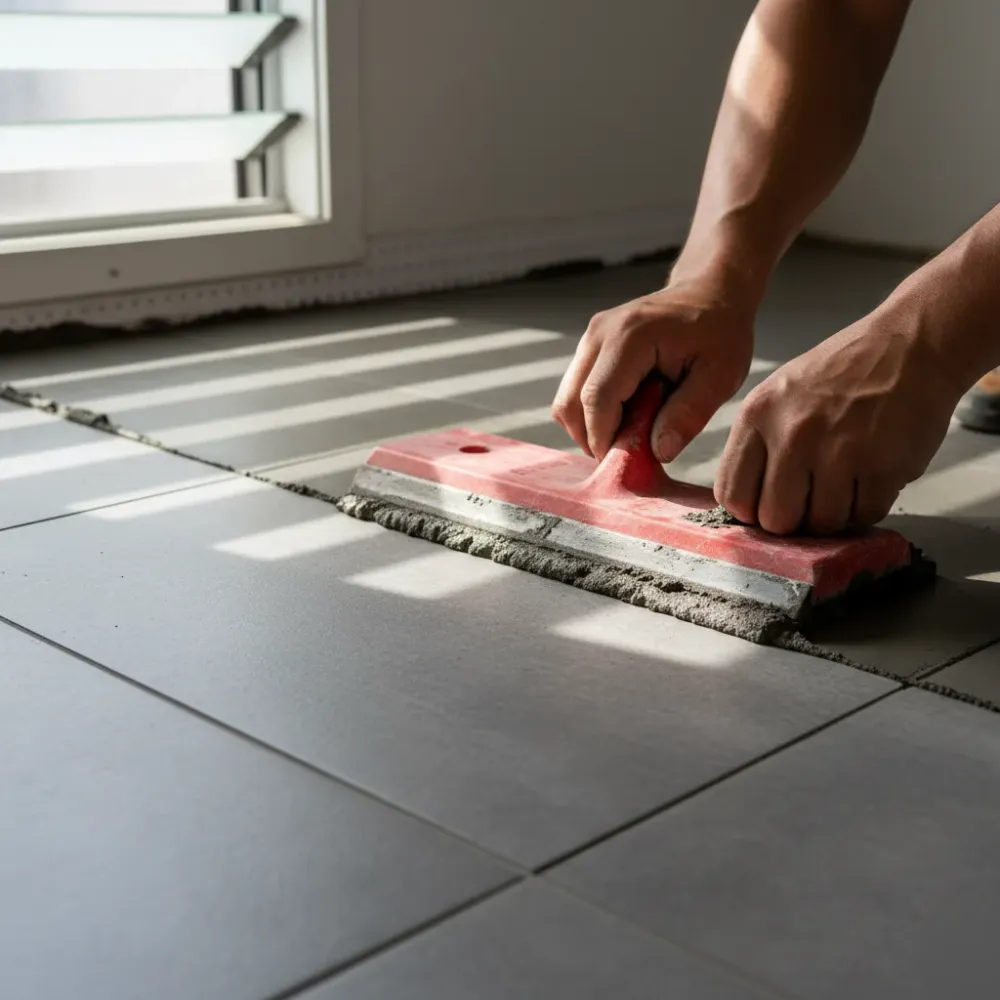
We step into Auckland residences on a weekly basis, most of them for Alchemy’s bathroom renovation work, and the issues we spot in the laundry are painfully familiar. So, what are the tell-tale indicators that your laundry has outgrown a makeover and requires a fresh rebuild?
- Signs of water damage to the floor or lower walls. Look for bubbling, peeling paint, or spongy areas in the flooring. Once moisture permeates the base layer, you can’t stop the rot.
- Haphazard plumbing. Think mismatched piping, sluggish drains, or a faucet that seems to have a mind of its own, refusing to fully shut off.
- A complete lack of storage and countertop. If you’re shoving detergents onto the ground and folding laundry on your dining table, your current setup just isn’t cutting it for a modern family.
- Recurring mould growth. You scrub it down, but it blooms again in a week. This isn’t a hygiene issue; it’s a lack of proper airflow or waterproofing.
- An outdated floorplan. If you live in a historic property in areas like Grey Lynn or Mt Eden, your laundry likely remains in the exact spot it occupied when the house was built. It might have made sense decades ago, but it probably doesn’t fit the dimensions of today’s machines.
There is one critical issue most homeowners don’t realise is lurking beneath their tiles until disaster strikes. If you have no waterproof membrane protecting your floor, one major hose leak could send flooding straight down into your subfloor. We’ve lifted vinyl flooring in Auckland laundries before, only to discover the joists underneath have been decaying for months. You can imagine how quickly a simple leak turns into a major expense.
I get asked this all the time: “Is my laundry room bad enough for me to spend thousands on a refurbishment?” This is a fair question. You can be forgiven for thinking you need a full-blown flood first before you call a contractor. However, the cost you’re paying now for a room that simply doesn’t meet your needs is probably higher than you realize. A laundry that causes you frustration every day, a space where you waste time, a room that smells of damp is an expense that’s far from trivial.
Beyond the convenience factor, safety cannot be overlooked. Older units frequently don’t have check-valves, and the plumbing often lacks proper backflow prevention mechanisms. Outlets might be in locations that are far too close to the washer. These aren’t just minor irritations, they are safety hazards. Our building codes have come a long way since the last time your laundry was touched.
So, if you’re seeing two or three of the above problems, then a laundry renovation is certainly not something you’re taking action on too soon. You’re actually a couple of years overdue.
Choosing the Right Layout for a Small or Awkward Laundry Space
Auckland laundries aren’t generally large in scale. It is what it is. On a regular basis, we’re visiting clients’ houses throughout Grey Lynn and Ponsonby where a laundry is wedged underneath a staircase or hidden inside a small hallway cupboard. Occasionally, your laundry might find itself squeezed into the narrow galley next to the garage and that’s precisely the kind of awkward configuration where a well-thought-out renovation becomes essential. With the right layout, a previously frustrating space can be transformed into one that finally meets your home’s needs.
We kick things off by conducting a complete measurement of the space, beyond just the floor dimensions. We’ll assess ceiling height, door swings, plumbing positions, and available wall area. 90% of the time, the current setup has wasted valuable space through haphazard appliance placement.
Layouts that Work
There are a number of standard set-ups that can be implemented. We’ll recommend one or another, depending on your circumstances:
- Stacked washer and dryer: This frees floor space for a dedicated workbench or ample storage space. Ideal for tight spaces below two metres in width.
- L-shaped bench layout: Takes advantage of a corner and provides a washing area on one side and a tub on the other.
- Single wall galley: A simple, straight-forward layout where everything is located along a single wall, which can also simplify plumbing and is well suited for converting cupboards.
- Hiding the laundry behind bi-folding doors: A common arrangement in Auckland apartments which share the space between the laundry and living areas.
Of course, each comes with its own set of compromises. The stacked option saves space, but reduces working bench height, for example, while the L-shape gives more space but requires a wider area, so it is worth considering. We always discuss options with you before proceeding with a layout.
One of the most common questions we’re asked is “Can my laundry space be saved?” What often surprises people is that changing the plumbing even 300mm in the wrong direction can impact the construction time. We prioritise plumbing and drainage falls before cabinetry and appliance selection. The layout must be designed around the plumbing, rather than vice versa. Over many Auckland laundry renovations, we have found the mistakes incurred by ignoring this to be highly regrettable.
We also think about functionality and how you’re going to use the room: Do you require a wall-mounted drying rack? Space for the dog wash? Room for hanging uniform after being washed? Those requirements will have a bigger impact on your space than its area alone.
That said, the biggest benefit a compact laundry gives is a vertical storage solution. Overhead cabinets, shelving and pull-out laundry baskets can be integrated into cabinetry. The trick is to design vertically when horizontal design isn’t feasible.
For a sense of how laundry and utility spaces factor into Auckland property value and layout decisions, this recently sold Narrow Neck property illustrates how well-considered interior spaces contribute to overall home appeal.
What to Expect from a Laundry Renovation in Auckland
Most people have never done a laundry renovation and will need a clear understanding of the process. We outline how it works, so there are no surprises.
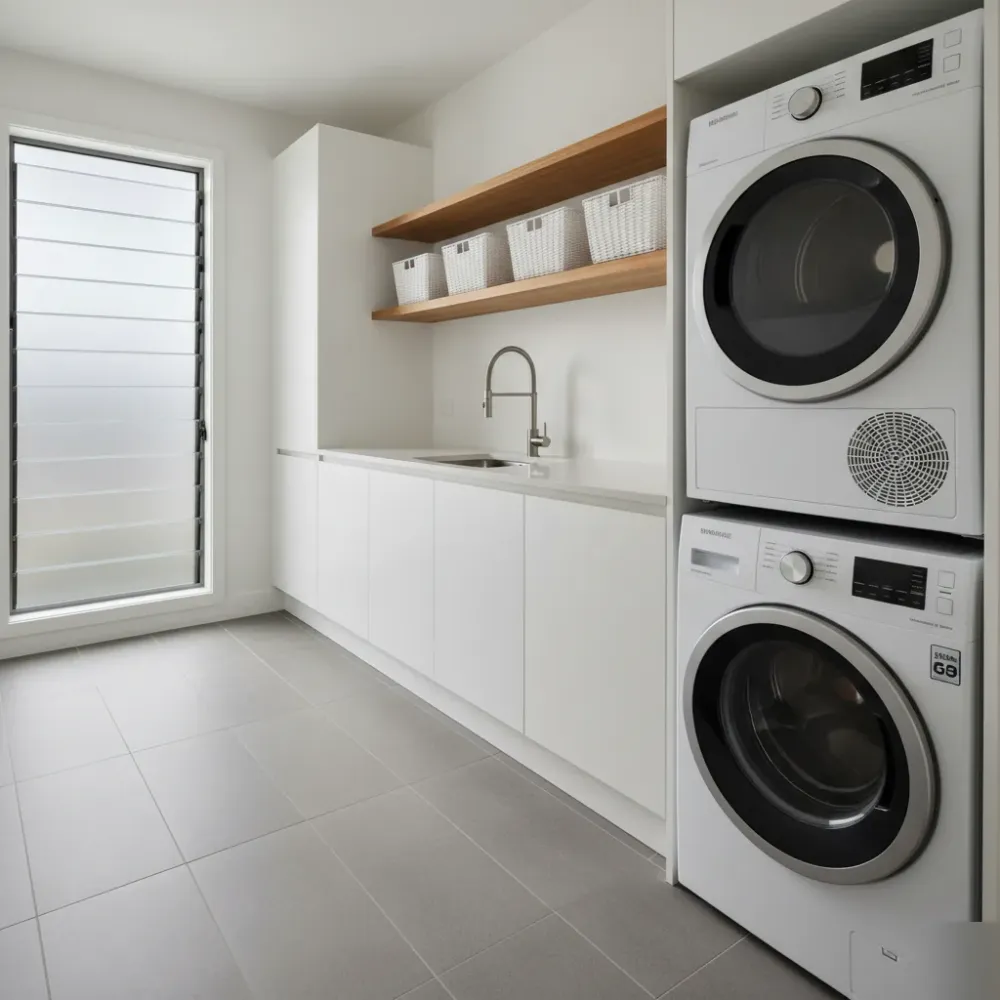
It starts with a site visit. We need to see your laundry first, prior to any design. Photos can’t tell you what the state of your plumbing behind the wall looks like or what your subfloor is up to. Over the visit, we’ll measure up, check the water pressure, check the drainage lines and we’ll have a chat about what you want. Expect it to take an hour or so, and note that a villa in Grey Lynn with original plumbing from the 20s is a different animal from a brand-new build in Flat Bush.
Once we have the scope of your project, you’ll receive a clear outline. I don’t mean a summary of the process. An actual plan, which items fall into which stage, and when. Most Auckland laundry room renovation projects proceed like this:
- Removal of existing cabinetry, benchtops, tiling and fixtures.
- Plumbing and electrical rough-in to match the new design (e.g. adding/relocating taps, new power points, changing or rerouting the drainage line to suit new layout).
- Waterproofing of floor and any wet areas. We let this cure before moving on to the next stage.
- Installing wall linings and plastering them.
- Installing cabinetry, benchtop installation and tiling.
- Connecting plumbing and installing electrical items as well as doing any necessary tests.
On most jobs, we complete everything in between two to three weeks, although some take longer or a few days sooner, depending on what we find behind the wall. We find a surprising amount of hidden rot and damage over time. Badly rotted framing around the washing machine, slowly weeping waste pipes and all that sort of thing.
You won’t have access to the laundry during a renovation. I hate to be blunt but that’s the case. We usually tell clients to move their washing machine somewhere for temporary use (even if it’s the garage for the duration connected to a garden hose). It’s not ideal but it works. The most destructive day will probably be day one, it will be noisy and there will be a certain amount of dust, after that will quieten down. We keep the working area confined and we tidy up at the end of every day, after all it’s your home, not a building site.
But what really matters is communication. We’ll keep you in the loop on every stage of the renovation, and let you know about anything we find or encounter that might alter a part of your design (building code compliance issues and all that). Everyone hates to discover that once it’s all closed up so you can give us a call anytime and have a chat about what your laundry renovation would look like and the price it would cost.
Need help with laundry renovations?
Call Now For Free Consultation. Alchemy Bathroom Renovations Auckland is ready to help.
Waterproofing and Tiling Standards for Laundry Rooms
A laundry room requires the same level of waterproofing protection that a shower would. That’s not a suggestion. It is, indeed, that. And it’s something many homeowners only discover when they’ve found a leaking shower, or a rotting floor, or something even worse.
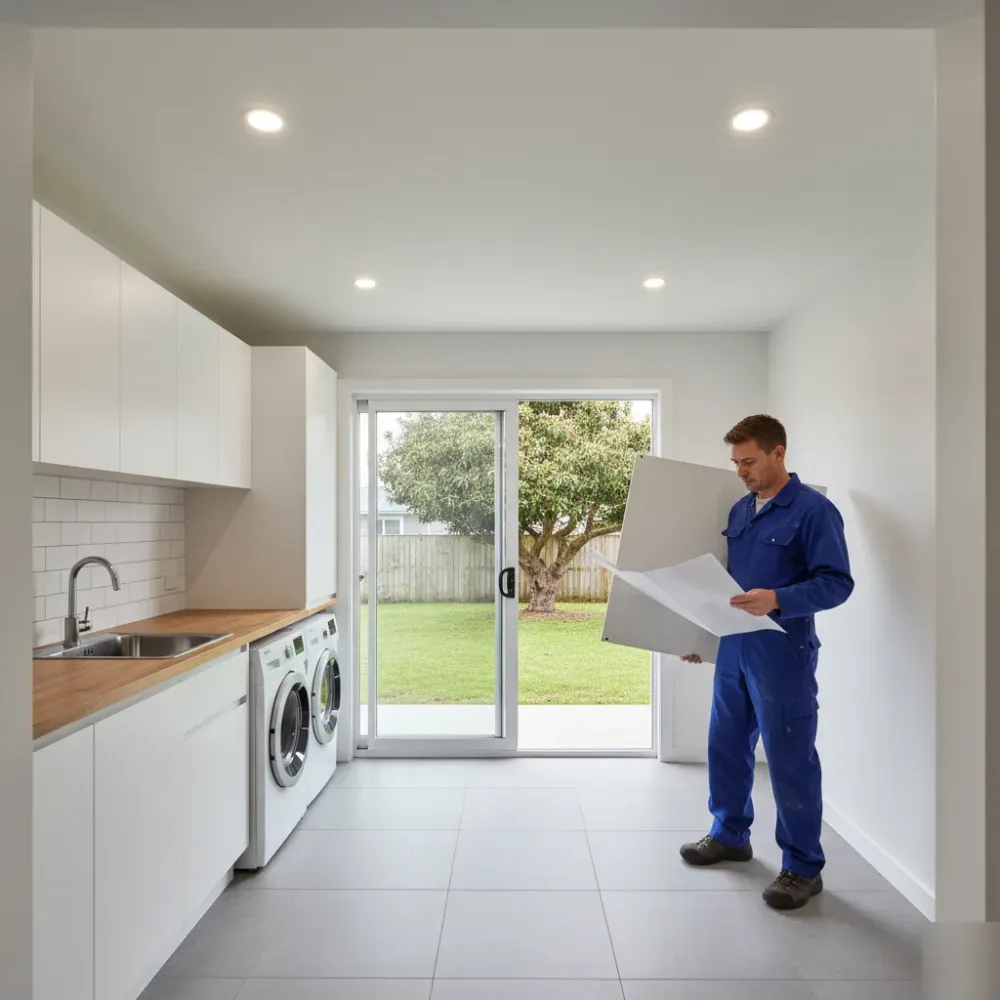
According to NZBC, any room with a floor waste and/or a water source has to be tanked. Your laundry room fits the bill on both counts. We’ve pulled up flooring in homes across the city, often finding the builder never waterproofed the area at all or only applied a poor quality paint-on membrane which failed after two years. It’s not uncommon to find that, underneath, timber framing and particle board are rotted and black mould has set into the wall cavity.
When doing a laundry renovation, the first thing we get right is waterproofing. It’s definitely not an afterthought:
- We strip the existing floor and wall linings back to inspect the substrate, replacing any damaged material so that the base we’re working from is solid.
- We then apply a two-coat liquid membrane system to the floor and up the walls to at least 150mm above the finished floor level.
- We reinforce the membrane at all corners, joins and penetrations by applying a fabric bandage set into the membrane.
- We let the membrane cure fully before any tiling commences — no shortcuts.
We often witness this important step being rushed by a builder. A membrane that hasn’t been given sufficient curing time will not bond to the substrate and may simply peel away.
Choosing the Right Tiles
Choosing the right tiles will make a big difference to how your new laundry will handle the inevitable moisture exposure. You definitely need slip resistance, ideally P3 or higher. Although a glossy porcelain can look good in a design magazine, it’s not something I can recommend to Auckland homeowners as it’ll be slippery as a skating rink when wet.
We usually recommend a textured porcelain or ceramic tile of 300×300 or 600×300, as they’ll look great and can handle the wear and tear from water, while being easy to keep clean. The wall tiles around the bathtub and behind the washing machine must extend upwards at least 600mm. This splash zone receives much more water exposure than people generally realise.
We recommend using an epoxy based grout for all wet areas. Traditional cement-based grouts can absorb moisture over time resulting in staining, discolouration and, worse, cracking. We’ve re-grouted laundries in suburbs such as Grey Lynn where the original grout has discoloured and turned black within eighteen months as a result of the wrong product selection.
However, the secret ingredient of a new laundry is what happens under floor level. The Building Research Association of NZ has noted that most moisture-related building failures are down to poor detailing at joints and penetrations, where pipes penetrate the floor and the wall. Any and all of these joints need a puddle flange or collar that’s been sealed into the waterproofing membrane. Miss a single one and you have a slow leak that may well remain unnoticed for years.
Want to know whether your current laundry has been waterproofed? Give us a call and we can inspect for you on a site visit. Getting this important foundation right is key to ensuring that your new laundry renovation will withstand the test of time for years to come. We’ve done laundry renovations like this over a thousand times, and the difference between a laundry that will stand the test of time and one that will rot from the inside-out is all these little details.
Frequently Asked Questions
Common questions about laundry renovations services
How long does a laundry renovation take in Auckland?
Most laundry renovations in Auckland take between five and ten working days from start to finish. The timeline depends on how much plumbing needs to be moved and whether waterproofing is required. If we discover rotted subfloor joists or outdated pipework underneath, that adds time. We always walk you through the full schedule before we start so you know exactly when your laundry will be back in use.
Do Auckland homes need a waterproof membrane in the laundry?
Yes, a waterproof membrane is required under your laundry floor in Auckland. New Zealand building codes treat laundry floors the same as wet areas like bathrooms. Without one, a single hose leak can soak straight into your subfloor and rot the joists underneath. Many older homes in areas like Grey Lynn and Mt Eden were built before this was standard practice, so we check for it on every renovation we do.
Can a really small laundry space actually be renovated properly?
Absolutely, small laundry spaces are what we work with most often in Auckland. Stacked washer and dryer combos, single wall galley layouts, and overhead cabinetry can turn a cupboard-sized space into something that works well every day. The key is planning the plumbing positions first and building the layout around them. Getting that order right is what separates a renovation that lasts from one that causes problems later.
What are the signs that my laundry needs a full renovation rather than just a repair?
If you are seeing two or more of these, a full renovation is the right move. Bubbling or spongy flooring, mould that keeps coming back, plumbing that drains slowly, or cupboards that won’t close due to moisture are all warning signs. A single repair won’t fix a room with multiple failing systems. At that point, you are spending money on patches when a proper rebuild would cost less over time.
Do I need to move out during a laundry renovation?
No, you do not need to move out during a laundry renovation. Most Auckland homeowners stay home throughout the job. We do recommend having a temporary laundry plan ready, like using a laundromat for the week. We keep the work area contained and tidy up at the end of each day. If your renovation involves waterproofing, there will be a curing period where the floor cannot be walked on, and we will let you know exactly when that is.
How do I stop mould from coming back after my laundry is renovated?
Good ventilation is the main thing that keeps mould away for good. We install ducted exhaust fans that vent outside the home rather than into the ceiling cavity. Waterproof wall linings and moisture-resistant cabinetry also make a big difference in Auckland’s humid climate. If your laundry had recurring mould before, it was almost always a ventilation or waterproofing problem, not a cleaning problem. We fix the cause, not just the surface.
Ready to Get Started?
Call Now For Free Consultation Call 09 884 6535 today.
