Auckland's trusted bathroom renovation specialists — licensed, experienced, and built to last
Licensed Building Practitioner (LBP No. BP1021390)
Licensed Waterproofer & PSA Author (PSA127420)
Over 30 Years Of Experience
15 Years of Guarantee on Waterproofing
What's Covered on This Page
- What a Small Bathroom Renovation Actually Involves
- Smart Layout Choices for Tight Bathroom Spaces
- Tile and Product Selection for Small Auckland Bathrooms
- How long does a small bathroom renovation take in Auckland?
- Do I need a building consent for a small bathroom renovation in Auckland?
- Why do small bathrooms in older Auckland homes cost more to renovate?
- What trades are involved in a small bathroom renovation?
- What is a wet room and is it a good option for a tiny Auckland bathroom?
- What should I expect when the renovation team arrives on the first day?
Need small bathroom renovations?
Call Now For Free Consultation. Call Alchemy Bathroom Renovations Auckland now.
What a Small Bathroom Renovation Actually Involves
When you hear "small bathroom renovation," your mind might go to just changing the vanity and fitting in a new tiles. Maybe that is 10% of the job. A renovation is much more than this. Most of the work is in the hidden work, the planning and the work behind the walls and under the floor. We always, always, strip the room right back first, down to the bones. If we are going to build good, it can't be built over rotten. We find issues all the time, especially here in Auckland and in older suburbs like Grey Lynn and Ponsonby. We find soft timber. Leaking shower bases that have been leaking for ages. We find black mould hiding behind the old particle board that the previous owners covered in tiles back in the nineties. You would not be able to see this on first look, but it is there.
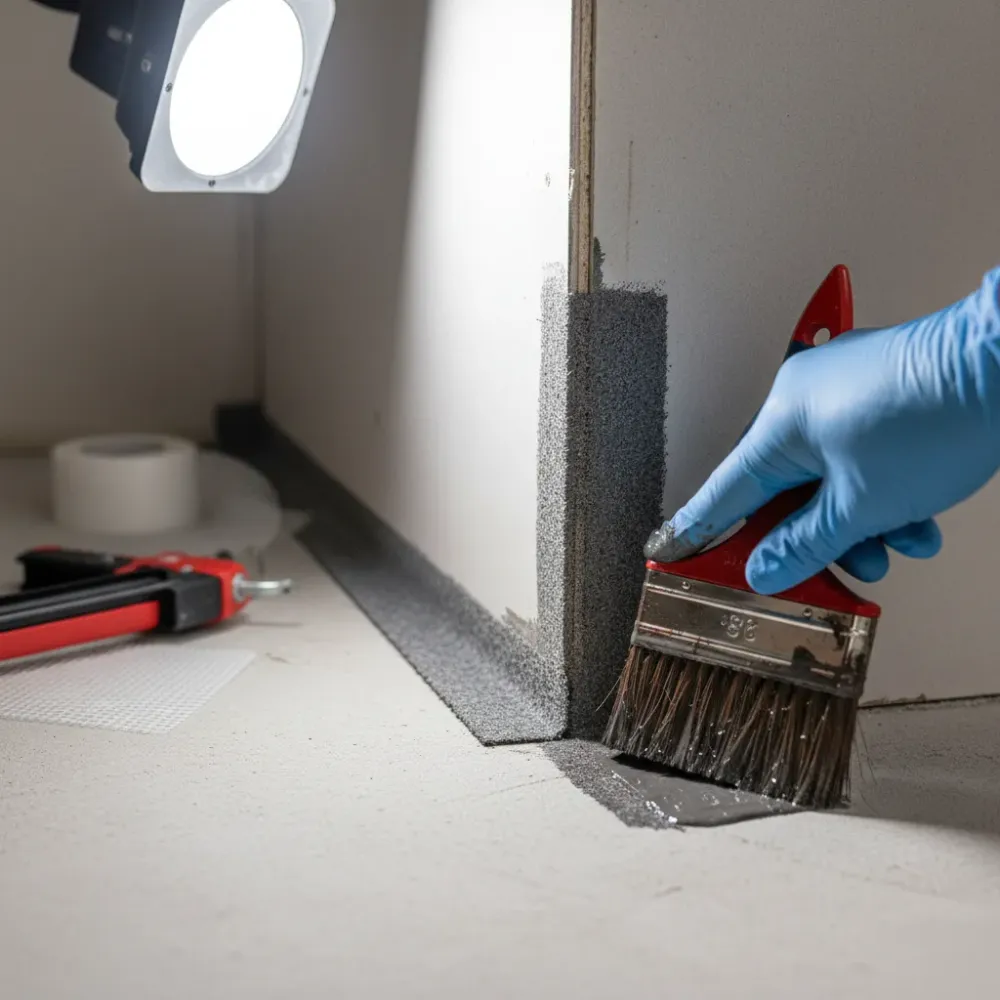
Once the room is stripped out, you see what a small bathroom renovation really is:
- We check the framing and the sub floor for any damage. Any repairs needed are carried out.
- The plumbing work gets re-done, particularly if the layout is going to change. Even shifting a toilet across 200mm can involve changes to waste lines.
- Next comes the electrical work. For example, towel warmers, vent fans, lighting circuit.
- Then comes the waterproofing work to all the wet areas. This cannot be skipped. We use liquid membranes that conform to NZBC standards.
- Finally, tiles, fixtures, vanity and finishings go in. This involves up to five different specialist trades. A plumber, an electrician, a builder, a waterproofer, and a tiler. Often a painter too. All have to be engaged at the right stage, otherwise the whole thing grinds to a halt.
The thing that people don't really realize is that the compact bathroom doesn't necessarily mean a small job. It just means tighter tolerances, and a few more decisions about exactly how you are going to fit everything into four or five square metres. Having done over 1000 of these jobs, compact rooms usually demand the greatest care when it comes to planning. As BRANZ has found, moisture control is the key element in bathroom longevity in all New Zealand homes, a finding we can confirm with the evidence of our own work on a weekly basis in Auckland. Bad waterproofing is the number one reason bathrooms fail early.
Small rooms are more than just a change of colour in the tiles. There is a structural side to them, the plumbing work, electrical, moisture control, and design of the layout. Skip any one of those and you'll be redoing the job in five years. How long can you expect for a small bathroom renovation in Auckland? Usually, two to three weeks once we are in the building. Of course, this is based on everything having been sorted out before work starts: the consents, council requirements if any are necessary, the ordering of the fixtures and tiles etc. We manage all this for our clients. Waterproofing and building work in Auckland bathrooms must comply with the Building Regulations 1992, which set out the minimum standards for construction and moisture control in residential buildings.
So, when it's all said and done, a small bathroom may look simple on the outside, but behind it is actually a complex building project. But if it is done right, every layer in place and nothing omitted, you will have a bathroom that is well designed to cope in the smaller space, but built for the long run.
Smart Layout Choices for Tight Bathroom Spaces
In a small bathroom, layout is everything. Get it wrong and the room feels tiny, no matter the tiles or fixtures. Get it right and you'll be walking in to the same space and people will be amazed. Our Auckland bathroom renovation team has done villas that had a small bathroom of under four square metres in total. That's not a lot to work with, however, it is plenty if you plan the layout before selecting a single product.
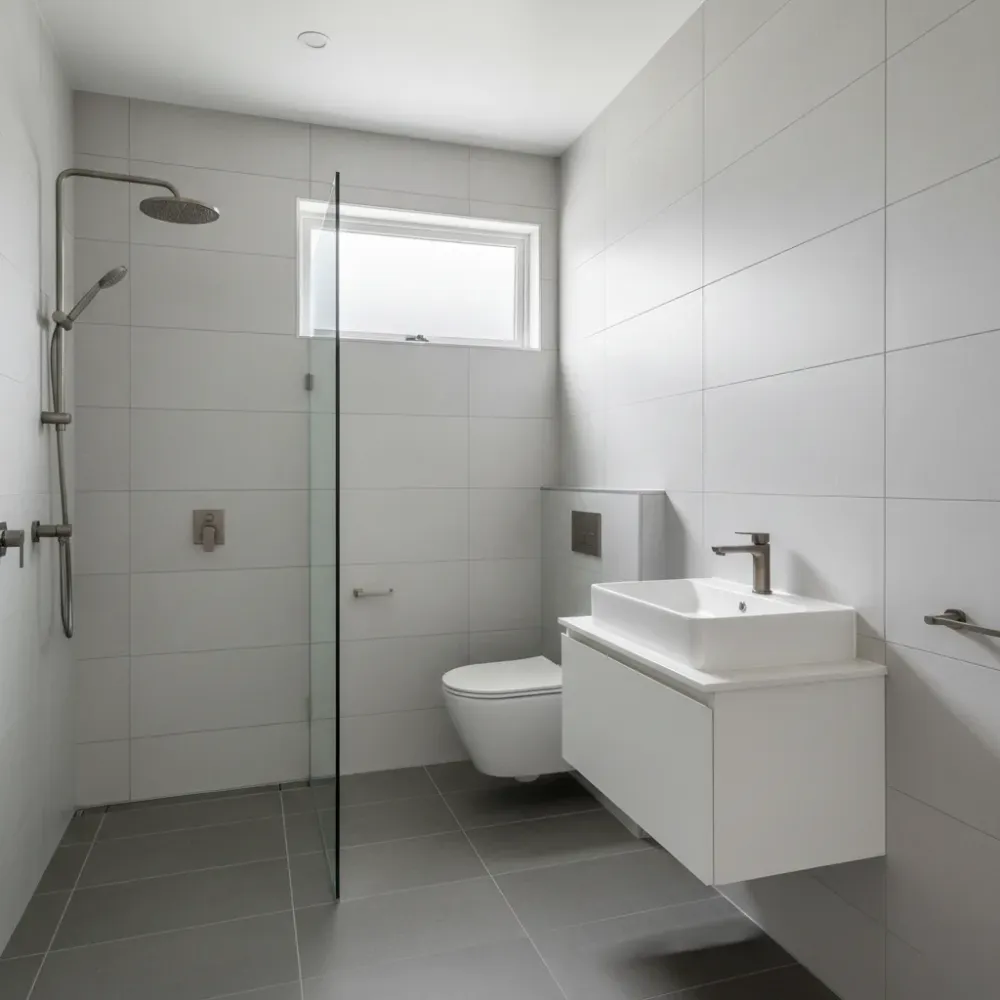
Our first consideration is the door. A standard swing-hinged door that swings open inside uses up almost a whole square metre of valuable floor space, while opening to the outside or using a sliding cavity changes the whole room's layout. Most people only find this out too late once they've built their walls and stuck themselves in to an unsuitable layout. Where the products are is more important than the product itself. Here is some of the thinking we do with layout design:
- Where to locate the toilet in relation to door openings and sight lines from the hall
- Where to place the shower against the longest wall to allow more standing room
- The depth of the vanity, because a standard 600mm deep vanity will take up precious space in a narrow room
- The location of towel rails and storage that does not impact the operation of the shower door
Nine times out of ten, the best answer is not the first answer. We move the plumbing point by 200 to 400mm often. Yes, it costs a bit more to relocate the waste pipes but it pays off in the short and long term to not have a bad layout. Using corner toilets and wall-hung vanities will free up the floor area to the surprise of most homeowners. A wall-hung vanity of 450mm deep as opposed to 600mm deep returns 150mm of room across the full width, which is all the difference in the world between a tight squeeze and a walk past when you enter the room.
Wet rooms and walk-in showers: If your bathroom is tiny, we might suggest that you do away with the shower enclosure. If you go for a fully tiled wet room with a linear floor drain the need for a shower tray and glass enclosure disappears. This effectively makes the whole bathroom a shower space. This is a great solution for some older style Ponsonby or Grey Lynn homes where a bathroom was tacked on to the side at a much later date. Not sure whether a wet room would suit? You are not alone. In ten minutes, we will know.
Don't overlook the ceiling. In many Auckland 1960s and 1970s houses, the bathroom had low ceilings, too. If there is a gap, recessed storage shelving can be constructed into the stud wall with the space utilised efficiently; we do this in almost every bathroom we work on now. You will get ample space in a simple shower wall niche to store shampoo, body wash and conditioner and other bottles with no unsightly hanging over-the-tap caddies.
The idea is simple. Each centimetre of space has to work. If it doesn't serve a purpose it shouldn't be there. We map out multiple options before settling on anything as, once the tradesperson puts in their pipes, you cannot move them.
Tile and Product Selection for Small Auckland Bathrooms
Most people don't find this out till too late. Small bathroom renovations have a bad reputation for going wrong. The tiles you choose can shrink the space, or they can make it feel larger. We see both results often in Auckland's small bathrooms. When it comes to renovation, in a small bathroom, everything has a bigger impact. A large bathroom has enough room to get away with poor tile choices, a smaller one does not. Your lovely 600mm x 600mm dark grey slate tile from the showroom might result in too many cuts and make your floor appear smaller. We usually advise our Auckland clients to use larger format tiles in a lighter tone for their floors as it reduces the grout lines and creates an appearance of more space.
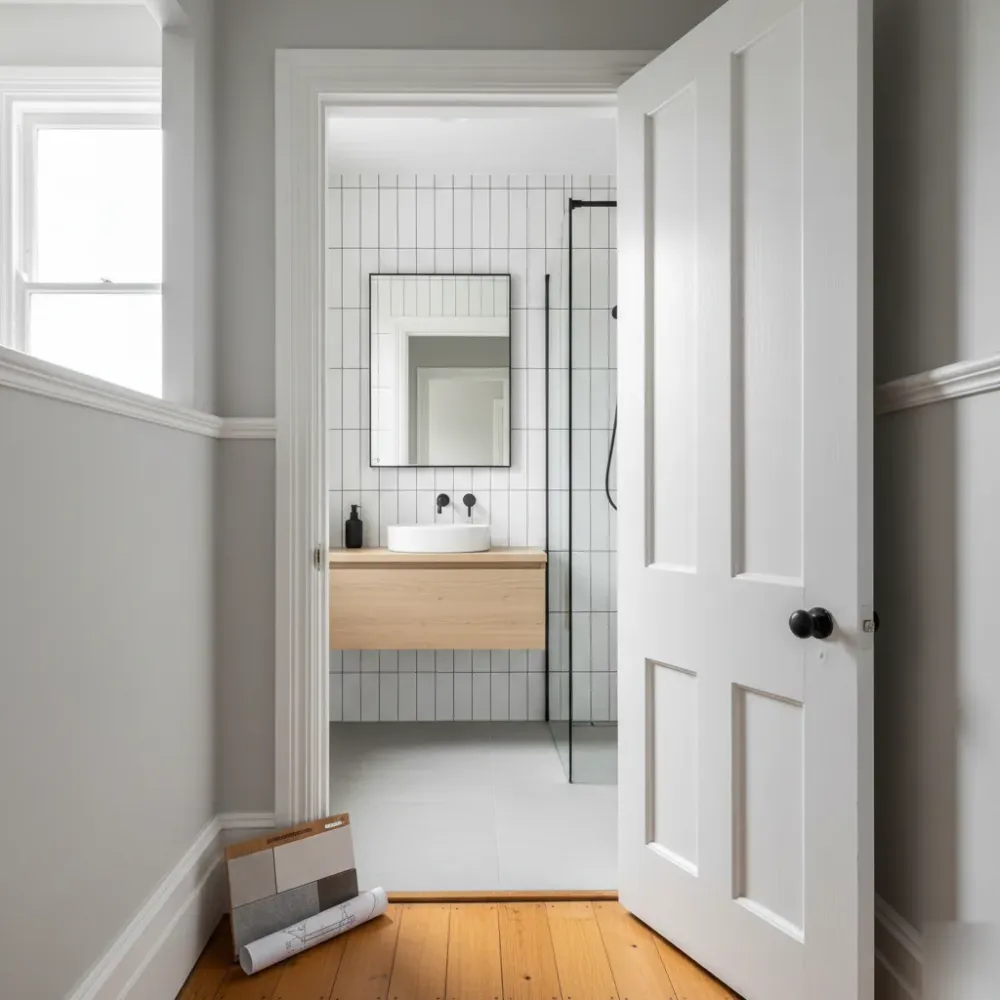
Tiles That Work In Small Spaces
Having renovated many bathrooms in Auckland, we have our preferences on the materials that work best. Here are some tiles we commonly use:
- Bigger format tiles for the floor that can be 300mm x 600mm or even larger in lighter colours as they can have less grout lines and look cleaner with easier maintenance
- Feature tiles on one wall only.
- Rectified tiles that are squared to make the grout lines tight, creating a seamless and modern look
- Matt finishes on the floor to give you some grip, and a gloss or semi-gloss finish on the walls to bounce the light around the space
Many of our Auckland clients are adamant that they want a dark modern feel to their small bathroom, however after talking through the tile finishes and layout options, the result is usually better and more successful.
The Fixtures Can Make A Difference In A Small Bathroom
Choosing the right fixtures in a small bathroom is key. Wall hung vanities are an ideal bathroom fitout element. As the vanity is wall hung you can see the floor and the floor plan of the space can flow through. A standard floor-standing vanity in a small bathroom in Auckland takes up valuable floor area that isn't necessarily available in the first place, so you should avoid them where you can.
Wall-hung toilets also save on the floor area because they don't stand on the ground and the cistern is concealed within the wall, giving more floor length back in the space. The shower also has a big impact on the feel of a small bathroom. We recommend using a large frameless glass screen in the shower. A standard framed shower screen with thick frames will appear larger and can block the passage of light, making your bathroom appear smaller. A framed glass shower panel will allow the light and eyes through into the next room, so a large bathroom can feel a lot larger, even when you're in a 3 square metre bathroom in Ponsonby.
Recessed shelves are another great solution for bathrooms as a tiled niche inside the shower can hold the products that would otherwise be placed on a large hanging caddy. It keeps the shower wall neat, is easy to keep clean, and costs very little extra during the build. The tapware is another consideration. Large rainfall shower heads are perfect in bigger bathrooms and en suites but can appear overwhelming if placed too close to your head in a smaller bathroom, so we try and pick fixtures and fittings that are appropriate to the space we're renovating in. A small bathroom requires a more compact mixer and standard shower head. We recommend keeping the same colour scheme throughout your bathroom renovation so that the taps match your tiles and the bathroom elements blend together rather than clash. This is especially important in smaller spaces, so it's important to make a cohesive choice that suits your bathroom size, and we can advise you on the best products to suit.
Need a little advice to help you find the right products to renovate a small bathroom? Give us a call. We will be happy to assist you.
Frequently Asked Questions
Common questions about small bathroom renovations services
How long does a small bathroom renovation take in Auckland?
Most small bathroom renovations in Auckland take two to three weeks once work begins on site. That timeline assumes everything is sorted beforehand — consents, fixture orders, and any council requirements. We manage all of that for you so there are no surprises mid-job. The hidden work, like framing repairs, waterproofing, and trade sequencing, is what takes the most time to get right.
Do I need a building consent for a small bathroom renovation in Auckland?
It depends on the scope of work. If you are moving plumbing, changing the layout, or doing structural work, a consent is likely required under the Building Regulations 1992. Waterproofing and moisture control must also meet NZBC standards regardless of consent. We assess this at the start of every job and handle the paperwork on your behalf so you are not left guessing.
Why do small bathrooms in older Auckland homes cost more to renovate?
Older homes in suburbs like Grey Lynn and Ponsonby often hide problems behind the walls. Soft timber framing, leaking shower bases, and black mould behind particle board are common finds once we strip the room back. These issues must be fixed before anything else goes in. You cannot build over rotten material and expect it to last. Fixing hidden damage adds time and cost, but skipping it means redoing the job in a few years.
What trades are involved in a small bathroom renovation?
A small bathroom renovation typically involves up to six trades: a builder, plumber, electrician, waterproofer, tiler, and often a painter. Each trade must come in at the right stage. If the sequence is wrong, the whole job stalls. We coordinate all of this for you so you do not have to chase six different people or worry about who should be on site and when.
What is a wet room and is it a good option for a tiny Auckland bathroom?
A wet room is a fully tiled bathroom where the entire floor drains, with no separate shower tray or glass enclosure needed. It is a great option when space is very tight. Removing the shower enclosure opens the room up and makes cleaning easier too. It works especially well in older Auckland homes where a bathroom was added on later and space was never planned properly from the start.
What should I expect when the renovation team arrives on the first day?
On day one, we strip the bathroom right back to the frame and subfloor. This is not just cosmetic removal — we are checking the bones of the room before anything new goes in. You will need the bathroom out of use from this point. We protect the rest of your home during access and clean up at the end of each day. Most Auckland homeowners are surprised by how much is going on before a single tile goes up.
Ready to Get Started?
Call Now For Free Consultation Call 09 884 6535 today.
